Field Guide · Nº 25
Great Hills
The 1980s canyon neighborhood that ended up ten minutes from everything Austin built afterward.
← All neighborhood guides Northwest Austin · Updated July 2026

The feel of Great Hills
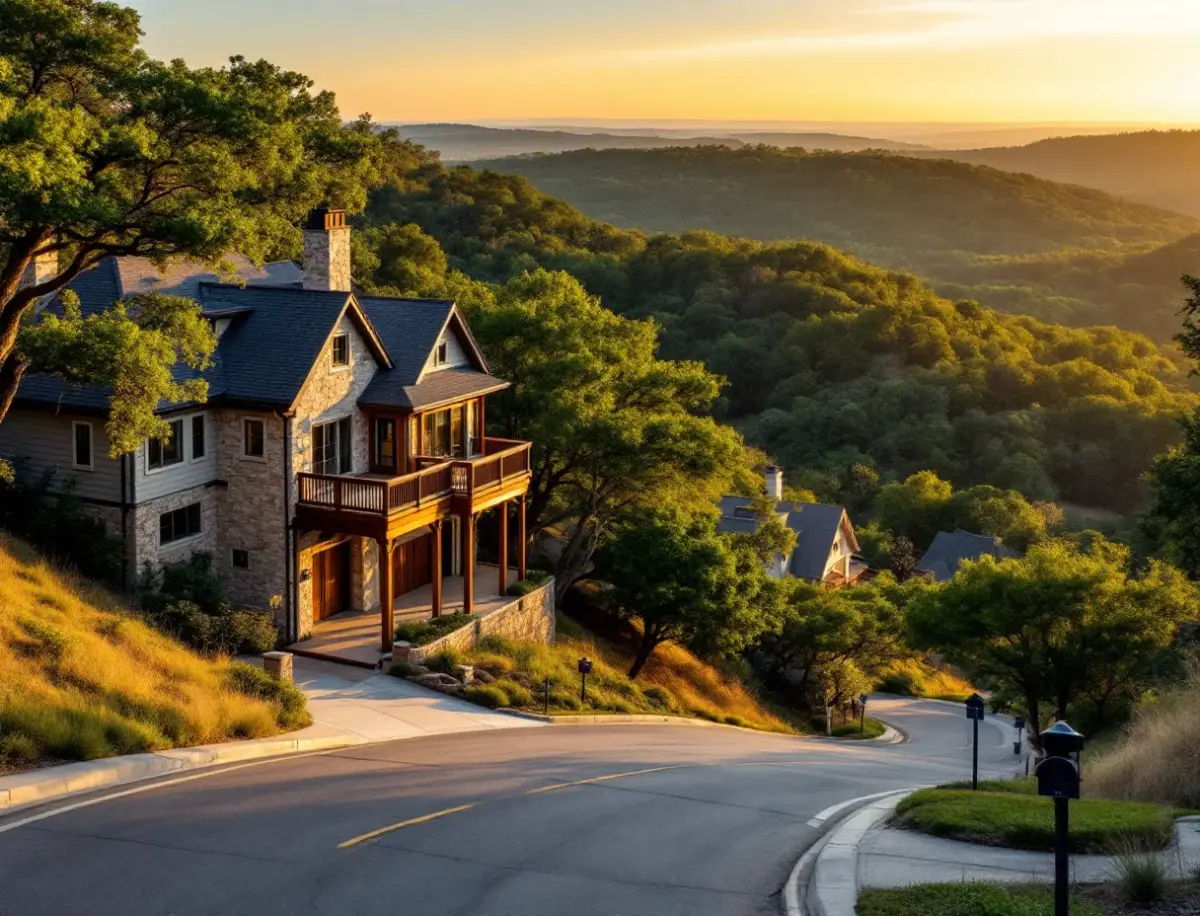
Great Hills was far-northwest Austin when it was platted in the late 1970s and 1980s — a canyon-country subdivision out past the city’s comfort zone, built around a country club golf course on terrain most builders of that era would have graded flat. Then Austin grew past it. The Arboretum arrived at its doorstep in the mid-80s, the 183 tech employers filled in, and the Domain rose ten minutes north. The result, four decades on, is something the city can’t build again: a mature canyon neighborhood with 1980s lot sizes and tree canopy, sitting in the middle of what is now Austin’s second downtown.
The streets tell the story. They curve with the land, dropping toward the wooded creek in Great Hills Park, and the architecture is agreeably varied — limestone contemporaries, cedar-and-glass 80s moderns, brick traditionals — under live oaks that have had forty years to close over the pavement. It’s quieter than its map position has any right to be, and that contrast is precisely what people buy here.
The homes and the market
The single-family stock is overwhelmingly 1980s–90s, running from 1,800-square-foot garden homes to 4,000-plus-square-foot showpieces on the golf course and canyon rims. Per Redfin and Zillow public market data as of mid-2026, single-family sales run from about $450K into the $1.3M range — with occasional canyon-rim and golf-course properties pushing higher — and medians have recently sat in the high $800Ks to mid $900Ks; verify current. The area’s substantial condo and townhome stock, much of it clustered near the Arboretum, starts in the $200Ks and offers one of the more affordable entries onto this school map anywhere in the city.
Inspection is where deals here are won or lost. Homes of this vintage carry original cast-iron drain lines, aging electrical panels, roofs and HVAC systems on their second or third replacement cycle, and — on the canyon lots — retaining walls and drainage paths that deserve an engineer’s eye rather than a glance. Many homes have been renovated beautifully; some have been renovated cosmetically. The spread between those two, at the same list price, is the largest source of buyer risk in this market, and it’s exactly where we spend our diligence energy.
Schools, taxes, and the practical file
Here is the fact that surprises the most buyers: Great Hills is split between two school districts, and the boundary runs through the area rather than around it. Most of the neighborhood sits in Austin ISD, feeding Davis or Hill Elementary to Murchison Middle and Anderson High — a well-regarded pattern with an IB program at Anderson. A western and northern portion sits in Round Rock ISD, feeding Laurel Mountain or Caraway Elementary to Canyon Vista Middle and Westwood High, one of the state’s most academically decorated campuses. Both patterns are genuinely strong; they are also genuinely different in culture and competitiveness, and listings get the assignment wrong often enough that we verify every address against both districts’ current zoning tools before an offer goes out.
Taxes are conventional in-city Austin: city, county, and whichever school district applies, landing effective rates around 1.8–2.1% before exemptions — verify by parcel. HOA dues, where they exist, are modest by suburban standards. No MUDs, no limited districts, no amenity assessments — the practical file here is refreshingly thin.
Getting around
This is the neighborhood’s ace. The Domain is 5–10 minutes, the Arboretum is functionally inside the neighborhood, and the 183 corridor employers are a frontage road away. Downtown Austin runs 20–30 minutes via MoPac, and the Domain has absorbed enough of the city’s office growth that many residents’ commutes have shortened over the years without anyone moving. The honest costs: US 183 and Loop 360 frame the neighborhood, and their intersections crawl at rush hour; and while everything is close, almost nothing is walkable in the true sense — you will drive five minutes to all of it. Buyers wanting real walkability at similar money should read our Northwest Hills guide and weigh the tradeoffs.
Who it fits
Great Hills fits buyers who want mature-neighborhood character — trees, terrain, architectural variety — without giving up proximity to the Domain and the north tech corridor. It’s a natural landing spot for households with one downtown and one Domain commute, for school-focused families willing to do the district homework, and for renovators who can see through 1984 wallpaper to good bones on a canyon lot. The condo stock serves first-time buyers wanting the school map before they can afford the house.
It fits less well if you want new construction, walkable streets in the urban sense, or a house that asks nothing of you at inspection. If the canyon terrain is what draws you but you want to go deeper into the greenbelt geography, the Bull Creek and Jester corridor just south trades some convenience for wilder surroundings — we cover it in its own guide, and we’d suggest reading them together.
The local's list
What we tell clients after the paperwork's signedGreen space & trails
- Great Hills Park — the neighborhood's own wooded canyon with creek crossings and trails, kept up largely by a devoted volunteer group
- The Arboretum's lawns and Harold Clayton's life-size cow sculptures — Amy's Ice Creams by the cows is a genuine local rite
- The upper Bull Creek greenbelt, minutes away down Spicewood Springs Road for waterfall hikes after a good rain
Eat & drink
- Eddie V's Prime Seafood at the Arboretum — the original location of the Austin-born institution; the bar happy hour is the local move
- Amy's Ice Creams at the Arboretum — order the Mexican vanilla and claim a cow
- La Madeleine on Great Hills Trail — the reliable weekend-breakfast default the neighborhood quietly depends on
Only-here bonuses
- Great Hills Country Club threads through the neighborhood — private golf and tennis without leaving the zip code
- The Domain's restaurant row is a ten-minute drive; locals get the big-city night out and the quiet canyon street in the same evening
See it in person
Walk Great Hills with us
An hour on the ground tells you more than a week online. We'll show you the streets that fit your life — and tell you which ones don't.
Prefer to talk first? Call (512) 537-8623 or email contact@raresidential.com.
Keep exploring
If you like Great Hills, also look at
Northwest Hills
1960s hillside Austin — mid-century homes with views, halfway between downtown and the Domain.
The Domain & North Austin
Austin's second downtown — walk to work, Q2 Stadium, and Rock Rose, with real neighborhoods a mile away.
Bull Creek & Jester
Waterfall greenbelt below, hilltop views above — Austin's wildest close-in geography, one corridor.